Navigating Progressive Jackpot Pools Across Networked Slot Offerings in Regulated Markets
Harper Albrecht · Aug 26, 2026
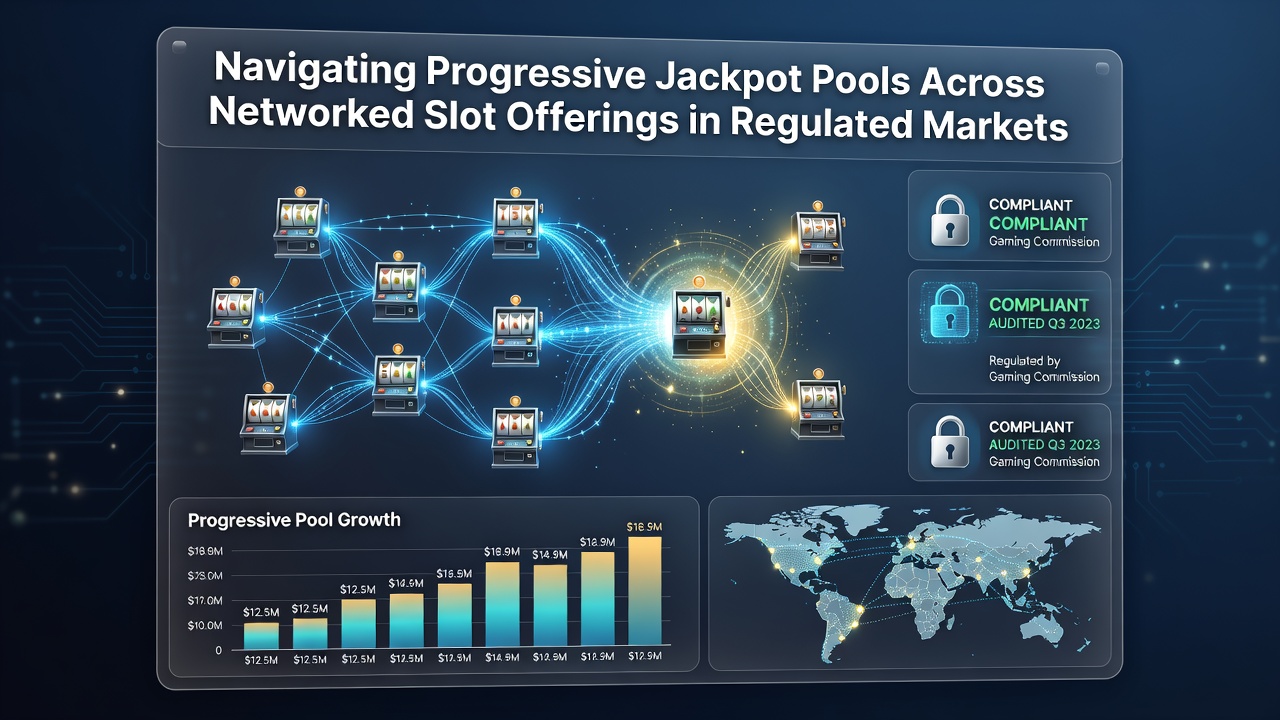
Navigating Progressive Jackpot Pools Across Networked Slot Offerings in Regulated Markets
Progressive jackpot pools link multiple slot machines across casinos or entire networks so that each wager contributes to a shared prize that grows until someone triggers the win, and this structure appears in regulated markets where operators must follow strict licensing rules for transparency and fairness. Those who study these systems note that contributions from each bet feed into one or more prize tiers while software tracks every transaction in real time.
How Networked Systems Operate in Practice
Operators connect individual terminals to a central server that calculates contributions at a predetermined percentage of each wager, and this percentage varies by jurisdiction yet remains fixed once approved by regulators. Data from multiple venues flows into the same pool so that players in separate locations compete for the same accumulating amount, which resets to a seed value after each payout and then begins building again. One study from the University of Nevada Reno examined contribution rates across linked machines and found that seed amounts often start between 10 and 20 percent of the expected average jackpot to maintain player engagement over longer periods.
Regulatory Frameworks Across Different Regions
Regulated markets impose licensing conditions that require independent testing of random number generators and jackpot controllers before any network goes live, and these requirements differ by location. In Ontario the iGaming Ontario framework mandates daily reconciliation reports while New Jersey requires the Division of Gaming Enforcement to review all progressive configurations prior to deployment. Australian states follow similar protocols through their respective gaming commissions, each demanding that operators maintain reserve funds sufficient to cover the current jackpot value plus any secondary tiers. Those who manage these systems must submit audit trails that detail every contribution, reset event, and payout so that authorities can verify compliance without delay.
Technical Requirements for Pool Integrity
Software platforms use encrypted connections between venues and the central host to prevent tampering, and they incorporate checksums that flag discrepancies within milliseconds. When a machine goes offline the contribution stream pauses automatically until reconnection occurs, which preserves the accuracy of the running total. Observers note that multi-tier progressives separate smaller local jackpots from larger wide-area ones so that daily play can still deliver wins while the network-wide prize continues to climb. Research published by the National Center for Responsible Gaming indicates that these layered structures appear in over 60 percent of wide-area progressive installations operating in North American jurisdictions as of mid-2025.

Contribution Rates and Payout Verification
Each bet allocates a fixed portion to the progressive meter while the remainder funds base game returns and operator revenue, and regulators review these allocations during annual license renewals. Verification procedures include live monitoring by third-party labs that compare meter readings against reported figures, and any variance triggers an immediate investigation. In August 2026 several Canadian provinces plan to introduce standardized data formats for jackpot reporting that will allow cross-border verification between Ontario and British Columbia systems, which reduces administrative duplication for operators active in multiple provinces. Those who implement the new formats expect faster approval cycles for network expansions because the shared reporting language eliminates repeated data translations.
Cross-Border and Multi-Venue Considerations
Operators running networks across state or provincial lines must satisfy each jurisdiction's reserve requirements simultaneously, which often means holding separate escrow accounts for each regulatory body. European markets apply similar rules through national gaming authorities that coordinate under broader EU guidelines on consumer protection and financial transparency. One case examined by the European Gaming and Betting Association showed that operators who maintain unified technical standards across borders achieve faster regulatory sign-off when adding new venues to an existing progressive network. The process involves submitting configuration files, contribution percentages, and seed values for simultaneous review rather than sequential approvals.
Conclusion
Progressive jackpot pools in regulated markets rely on precise technical controls, independent verification, and jurisdiction-specific licensing that together maintain system integrity across networked slot offerings. Data from multiple regulatory bodies demonstrates consistent use of real-time monitoring, reserve funding, and audit trails to support these structures. As markets continue to refine reporting standards and technical requirements, operators adapt their platforms to meet the evolving specifications while preserving the core mechanism that allows contributions from many players to build shared prizes.